
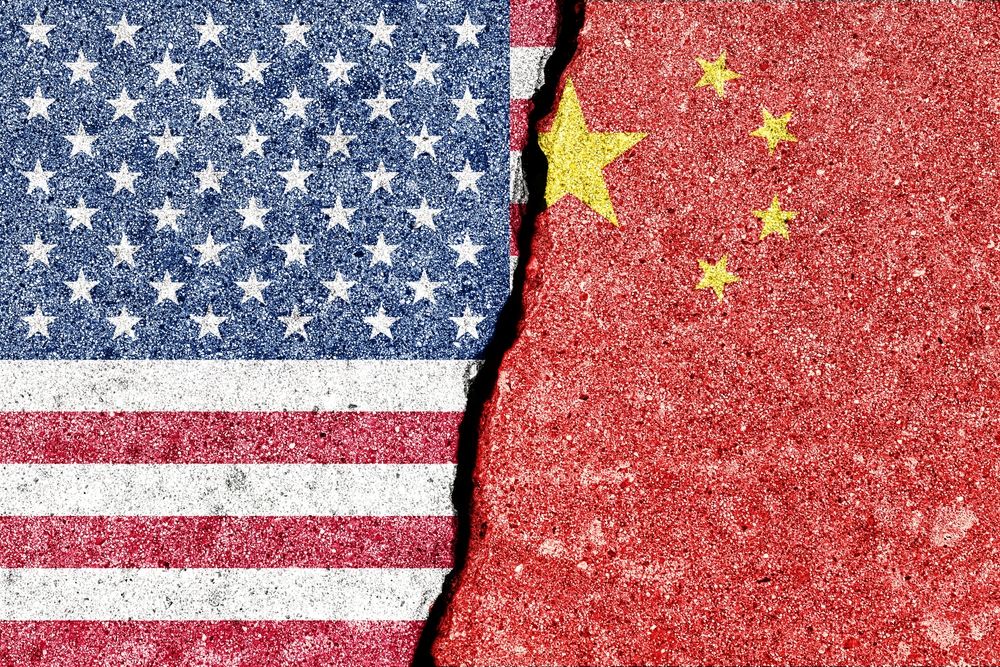
The world is changing, and the rise of China is at the center of these changes. China's rise is tied to its goal of being a global power. To achieve this objective China is making advances in military, technological, economic, and global power projection. This executive course will address US perspective or China's perspective of themselves, current and future aspects across these areas that impact US and Chinese ability to compete effectively over time.
In this two-day course, faculty will guide participants through China’s short and long-term power projection goals in economics, technological innovation, military strength, and foreign relations – outlined in the session descriptions below.
The Potomac Institute for Policy Studies invites early to mid-career professionals with an interest in understanding key elements of great power competition as it relates to China and their rise as a global and military power. This course is perfect for industry, government, and academic professionals alike with a shared goal of understanding the intersection of policy, science, and technology and its impact on U.S. ability to compete in the face of rising global competition.
Course Information
Course Dates | June 14-15, 2023 |
Registration Deadline | June 7, 2023 |
Location | Potomac Institute Ballston Headquarters 901 N Stuart Street Arlington VA, 22203 |
Course Director | Dean Cheng |
Course Agenda

Session Descriptions
This session will introduce the broad course topic and provide an overview of China to include historical perspective and some of the current challenges we face with China.
Speaker – Dean Cheng
Faculty
Dean Cheng is currently a Senior Fellow at the Potomac Institute for Policy Studies, specializing in the US relationship with China. Prior to being with the Potomac Institute, he retired as the Senior Research Fellow for Chinese Political and Military Affairs at the Heritage Foundation. He is fluent in Chinese and uses Chinese language materials regularly in his work. Previously, he worked with the China Studies Division (previously, Project Asia) at the Center for Naval Analysis, a Federally Funded Research and Development Center, where he specialized in Chinese military issues, with a focus on Chinese military doctrine and Chinese space capabilities. Before that, he worked for Science Applications International Corporation (SAIC), as an analyst with the US Congress’ Office of Technology Assessment in the International Security and Space Division. His published work includes the volume Cyber Dragon: Inside China’s Information Warfare and Cyber Operations (Praeger Publishing, 2016). He has testified before Congress, and spoken at the National Space Symposium, the US National Defense University, the USSTRATCOM Deterrence Symposium, Harvard, and MIT. He has appeared frequently in print and broadcast media to discuss Chinese space and military activities.
Robert Daly was named as the second director of the Kissinger Institute on China and the United States at the Woodrow Wilson Center in August 2013. He came to the Wilson Center from the Maryland China Initiative at the University of Maryland. Prior to that, he was American Director of the Johns Hopkins University-Nanjing University Center for Chinese and American Studies in Nanjing. Robert Daly began work in U.S.-China relations as a diplomat, serving as Cultural Exchanges Officer at the U.S. Embassy in Beijing in the late 80s and early 90s. After leaving the Foreign Service, he taught Chinese at Cornell University, worked on television and theater projects in China as a host, actor, and writer, and helped produce Chinese-language versions of Sesame Street and other Children’s Television Workshop programs. During the same period, he directed the Syracuse University China Seminar and served as a commentator on Chinese affairs for CNN, the Voice of America, and Chinese television and radio stations. From 2000 to 2001, he was American Director of the U.S.-China Housing Initiative at the Department of Housing and Urban Development. Mr. Daly has testified before Congress on U.S.-China relations and has lectured at scores of Chinese and American institutions, including the Smithsonian Institution, the East-West Center, the Asia Society, and the National Committee on U.S.-China Relations. He has lived in China for 11 years and has interpreted for Chinese leaders, including Jiang Zemin and Li Yuanchao, and American leaders, including Jimmy Carter and Henry Kissinger.
Alexi Drew is a Technology Policy Adviser at the International Committee of the Red Cross, based in the London Delegation. Her most recent other positions include senior analyst in Defense, Security, and Infrastructure at RAND Europe, a research analyst at The Policy Institute (King’s College London), and an associate at the Centre for Science and Security Studies (CSSS) at King’s, and the Global Network on Extremism and Technology (GNET). Her work focuses upon emerging technologies, the international norms surrounding them, and their impact upon international relations and geopolitics. Alexi is an adviser for the Women in International Security (WIIS) UK Chapter, a member of the advisory board for Minorities in Peace and Security (MiPS), and a mentor for Girl Security. She is currently the Policy Officer of the Political Studies Association (PSA) special group on Technology and Internet Policy as well as being a Fellow of the Royal Society of Arts, and a member of the Chartered Institute for IT or British Computing Society. Alexi has a specific interest in information operations, platform governance, arms control, algorithmic power, cyber security, and artificial intelligence. She blames her career path on too much Star Trek while growing up.
Patrick Ennis has more than 30 years of experience as a scientist, engineer, businessman and venture capitalist. He is a Venture Partner at Madrona Ventures. Previously he was Global Head of Technology at Intellectual Ventures where he invested in technology commercialization worldwide. Prior to that he was at ARCH Venture Partners where he built startups from universities and national labs. He also held positions with Lucent Technologies, AT&T and Bell Labs, and conducted research in Nuclear Physics at national labs in North America and Europe. He is an inventor on several patents, has written many articles and book chapters and is a frequent invited speaker. Patrick has served on numerous corporate, educational, and non-profit boards. He earned a Ph.D. and MS in Physics from Yale, an MBA from Wharton and a BS in Mathematics and Physics from William and Mary where he was elected to Phi Beta Kappa. Patrick has spent more than 3 years living and working in Asia and has done business in 31 countries, including more than 50 trips to China since 2003.
Phillip C. Saunders is the Director of the Center for the Study of Chinese Military Affairs. He has been a Distinguished Research Fellow at the Institute for National Strategic Studies since January 2004. Dr. Saunders served as Director of Studies for the Center for Strategic Research from 2010-12, with responsibility for supervising the Center’s research on regional, global, and functional security issues. Dr. Saunders previously worked at the Monterey Institute of International Studies, where he served as Director of the East Asia Nonproliferation Program from 1999-2003 and taught courses on Chinese politics, Chinese foreign policy, and East Asian security. He has conducted research and consulted on East Asian security issues for Princeton University and the Council on Foreign Relations and previously worked on Asia policy issues as an officer in the United States Air Force. Dr. Saunders is co-author with David Gompert of The Paradox of Power: Sino-American Strategic Restraint in an Era of Vulnerability (NDU Press, 2011) and co-editor with Andrew Scobell of PLA Influence on China’s National Security Policymaking (Stanford University Press, 2015). He has also edited NDU Press books on Chinese contingency planning, China-Taiwan relations, the Chinese Navy, and the Chinese Air Force. He has published numerous articles and book chapters on China and Asian security issues in journals such as International Security, China Quarterly, The China Journal, Survival, Asian Survey, International StudieS Quarterly, Pacific Review, Orbis, Asia Policy, and Joint Forces Quarterly.
Derek Scissors is a senior fellow at the American Enterprise Institute (AEI), where he focuses on the Chinese and Indian economies and on US economic relations with Asia. He is concurrently the chief economist of the China Beige Book. Dr. Scissors is the author of the China Global Investment Tracker. Since 2008, in a series of papers, he has beenchronicling the end of pro-market reforms in China and the resulting slide toward economic stagnation. He has also written multiple papers on the best course for Indian economic development. Before joining AEI, Dr. Scissors was a senior research fellow in the Asian Studies Center at the Heritage Foundation and an adjunct professor of economics at George Washington University. He has worked for London-based Intelligence Research Ltd., taught economics at Lingnan University in Hong Kong, and served as an action officer in international economics and energy for the US Department of Defense. He also served as a commissioner on the US-China Economic and Security Review Commission. Dr. Scissors has a bachelor’s degree from the University of Michigan, a master’s degree from the University ofChicago, and a doctorate from Stanford University.
Faculty