
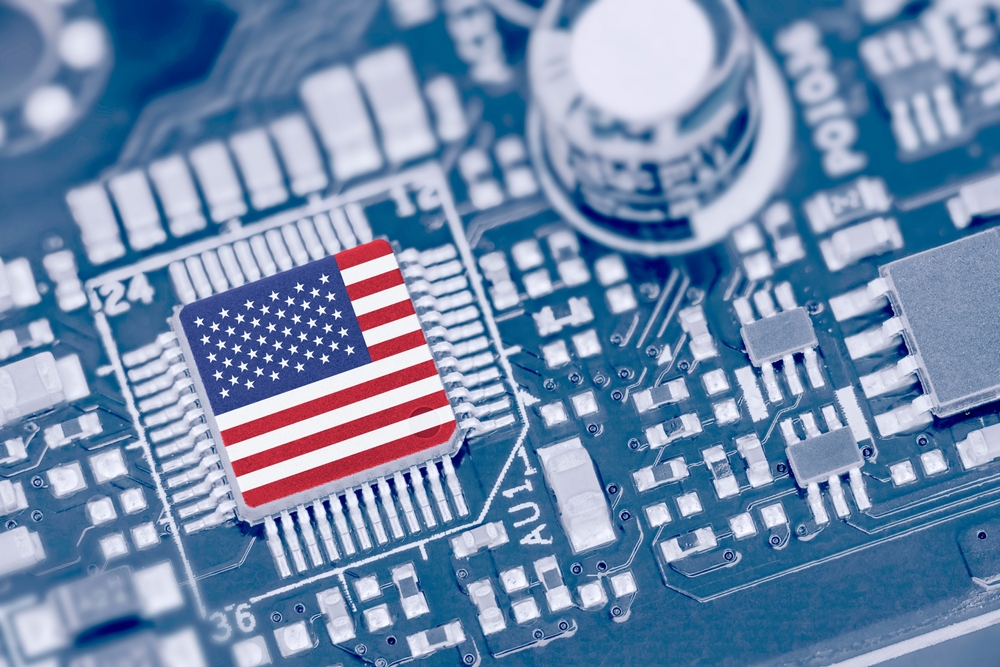
The recently passed, CHIPS for America Act is one of the largest U.S. government investments in domestic semiconductor capabilities in a generation. This bill highlights the importance of the microelectronics supply chain security and resilience. This is a serious global challenge due to limited access to essential materials and facilities that can manufacture these essential technologies. The key motivations for implementation of this act were COVID-induced shortages from lowered supplies due to work force and supply chain availability. This, coupled with U.S. concerns on economic competition with China, helped galvanize U.S. focus on the need for U.S. based production of critical technologies like semiconductors.
The CHIPS for America Act is a complex piece of legislation with many parts. For manufacturing semiconductors, the bill amounts to $52 billion of USG investments for domestic semiconductor capabilities. There are multiple areas addressed by the legislation, including incentives for production and establishment of new research and development enterprises. Additionally, the legislation contains multiple types of execution vehicles, including grants and tax incentives. What do these large investments really mean? How will they be executed to benefit the U.S.? And what do the details of CHIPS really mean for those that want to invest?
Find the answers to all this and more at the Potomac Institute for Policy Studies’ new executive education course – CHIPS: The Real Deal and What it Means for US.
This 2-day course, hosted at the Institute, will explore the recent groundbreaking CHIPS legislation. It will review motivations for this investment as well as the various sections in the bill. The class will also cover the execution options available and how this legislation can best impact the interests of the U.S. economy and national security.
The course will be led by an esteemed set of instructors with considerable experience in this field. Our instructors will help participants understand the big picture of the CHIPS Act and its intended impact to U.S. economics and national security. They will present a briefing followed by a dialogue between the participants and instructors to elicit critical understanding of the concepts and issues. The course will culminate in an interactive exercise where participants will create their own recommendations for proposed CHIPS execution, led by experienced coaches.
The Potomac Institute for Policy Studies invites early to mid-career professionals with an interest in understanding the complexities and nuances of the recently passed CHIPS Act and its impact on the U.S. economy and national security. This course is perfect for industry, government, and academic professionals alike with a shared goal of identifying and addressing the challenges the U.S. faces in the microelectronics realm.
Course Information
Course Dates | October 26-27, 2022 |
Application Deadline | October 11, 2022 |
Location | Potomac Institute Ballston Headquarters 901 N Stuart Street Arlington VA, 22203 |
Course Director | Dr. Michael Fritze |
Session Descriptions
Understanding the details of the bill is crucial to prioritizing the available funding. Where should this money go? In this session, participants will take a closer look at the CHIPS Act semiconductor related language with the goal of understanding the intent of this bill.
Speaker: Dr. Michael Fritze
Faculty
John Behnke has 35 years of semiconductor industry experience including: logic and memory manufacturing, technology/product development and fab operational excellence. As the GM of Final Phase Systems an INFICON Product Line, Behnke leads a team that develops and deploys SMART software solutions that enable fabs to improve their manufacturing efficiency.
Dr. Michael Fritze is a Senior Fellow and former Vice President at the Potomac Institute for Policy Studies responsible for the Microelectronics Policy portfolio. His activities include USG trusted access strategies, support of needed legacy technologies. DOD innovation policy and outreach to Industry and strengthening the U.S. Microelectronics Industrial Base. He is also the Director of the VITAL Center (Vital Infrastructure Technology and Logistics) at Potomac.
Dr. Paolo Gargini was a member of the Sematech Board until 2012. He also heads the International EUV Initiative (IEUVI) and the International Consortia Cooperation Initiative (ICCI). Gargini became the first Chairman of the Governing Council of the Nanoelectronics Research Initiative (NRI) funded in June 2005 by SIA. Gargini was inducted in the VLSI Research Hall of Fame in 2009. He was elevated to International Fellow of the Japan Society of Applied Physics in 2014.
Ted J. Glum is the former Director of the US Defense Microelectronics Activity (DMEA), serving in that capacity from its inception in 1996 to his retirement in 2018. As the Director, Glum reported to the Assistant Secretary of Defense for Research and Engineering, (ASD (R&E)), and was responsible for over $2 Billion of microelectronics technology programs in addition to numerous classified programs for the Department of Defense (DoD) and Intelligence Community.
Ardavan Mobasheri is a Senior Research Fellow at the Potomac Institute for Policy Studies. He has over 30 years of experience in the private sector and academia. Ardavan is an economist specializing in macroeconomics, financial economics, corporate and international finance, industrial organization, economic history, and corporate strategy.
Jennifer Santos is the Principal Director for Strategic Initiatives in the National Security and Space (NS&S) business and Draper. In this role, she leads teams to address critical national challenges in defense and aerospace. Prior to Draper, Santos was appointed in June 2019 as the Deputy Assistant Secretary of Defense for Industrial Policy (IndPol).
The Honorable Alan R. Shaffer is a member of the Board of Regents at the Potomac Institute for Policy Studies. He served as the Deputy Under Secretary of Defense for Acquisition and Sustainment (A&S) from January 2019 to January 20, 2021. From 2015 to 2018, Mr. Shaffer served as the Director, NATO Collaboration Support Office in Neuilly-sur-Seine, France.
Brian Shirley is a senior executive and advisor with over 34 years of broad-based experience in the semiconductor industry, including fourteen years as an executive officer of Micron Technology, a US-based Fortune 500 leader in semiconductor memory, as well as several years of senior consulting to the US Government on topics related to the Semiconductor Industry and US National Security.
The Honorable John Young, former Under Secretary of Defense for Acquisition, Technology and Logistics, is a Senior Fellow and Member of the Board of Regents of the Potomac Institute for Policy Studies. Mr. Young’s distinguished career includes past positions as Director, Defense Research and Engineering (DDR&E); and Assistant Secretary of the Navy for Research, Development, and Acquisition (ASN(RDA)).