
- Potomac Institute for Policy Studies
Al Shaffer on Technology, Policy, and the Long Game of National Security
- Potomac Institute for Policy Studies
As the Potomac Institute celebrates its 30th year, we are revitalizing our brand to meet the challenges of a contested global order. Central to this transformation is the "People Power" that has defined us for three decades, led by our Board of Regents. Welcome to our latest interview series: Regents in Conversation, a masterclass in the bold, unconventional thinking that gives our clients, and our nation, what it needs, not just what it wants.
In this series, CEO Jennifer Buss sits down with a few esteemed members of PIPS’ Board of Regents to discuss their respective work and careers, their experience with The Potomac Institute, and their thoughts on current and future policy topics.
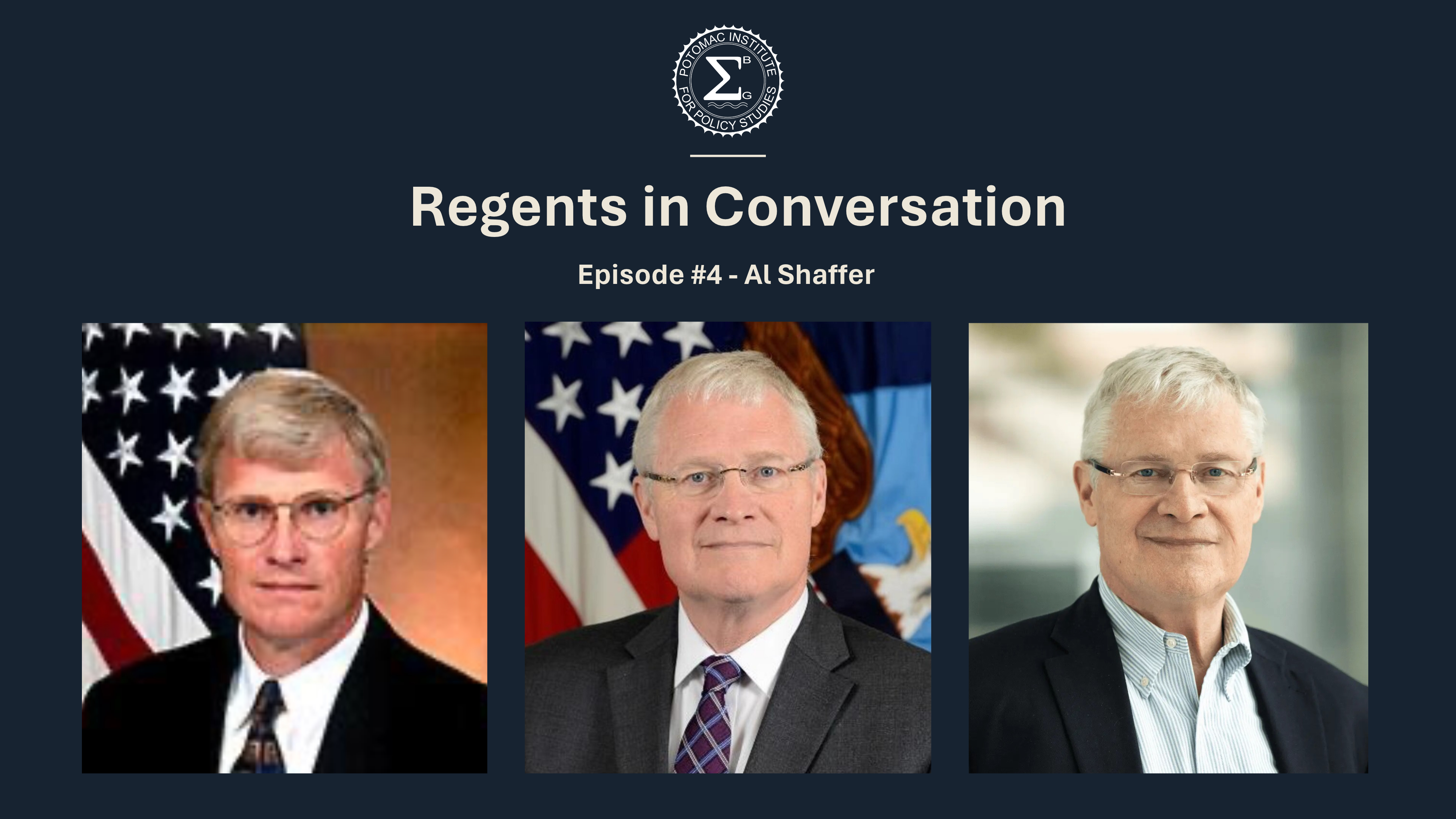
In this episode of Regents in Conversation, Jen Buss speaks with Al Shaffer, former Acting Under Secretary of Defense for Research and Engineering and former Principal Deputy in the department’s science and technology enterprise, about the long arc of technology policy and national security. Drawing on decades of leadership at the intersection of defense innovation, acquisition, and government strategy, Shaffer reflects on how the Department of Defense has approached emerging technologies including autonomy, quantum, biotechnology, and microelectronics.
The conversation also examines the Potomac Institute’s role in helping government think more strategically about science and technology, from shaping technology priorities across the department to connecting policymakers with the expertise needed to act on long-term challenges. Shaffer emphasizes that meaningful capability does not emerge on political timelines, and that sustained investment in research, workforce development, and independent analysis remains essential to preserving U.S. technological advantage.
Key Takeaways:
- Align technology, acquisition, and policy before funding decisions lock in the wrong path.
- Protect sustained research investment to preserve U.S. national security and economic advantage.
- Write policy for long development timelines, not short political cycles.
- Use independent analysis to test assumptions before turning ideas into legislation or programs.
- Build stronger pathways between experts, agencies, and Congress to move insight into action faster.