
- Potomac Institute for Policy Studies
Mark Lewis on Hypersonics, National Security, and the Power of Good Policy
- Potomac Institute for Policy Studies
As the Potomac Institute celebrates its 30th year, we are revitalizing our brand to meet the challenges of a contested global order. Central to this transformation is the "People Power" that has defined us for three decades, led by our Board of Regents. Welcome to our latest interview series: Regents in Conversation, a masterclass in the bold, unconventional thinking that gives our clients, and our nation, what it needs, not just what it wants.
In this series, CEO Jennifer Buss sits down with a few esteemed members of PIPS’ Board of Regents to discuss their respective work and careers, their experience with The Potomac Institute, and their thoughts on current and future policy topics.
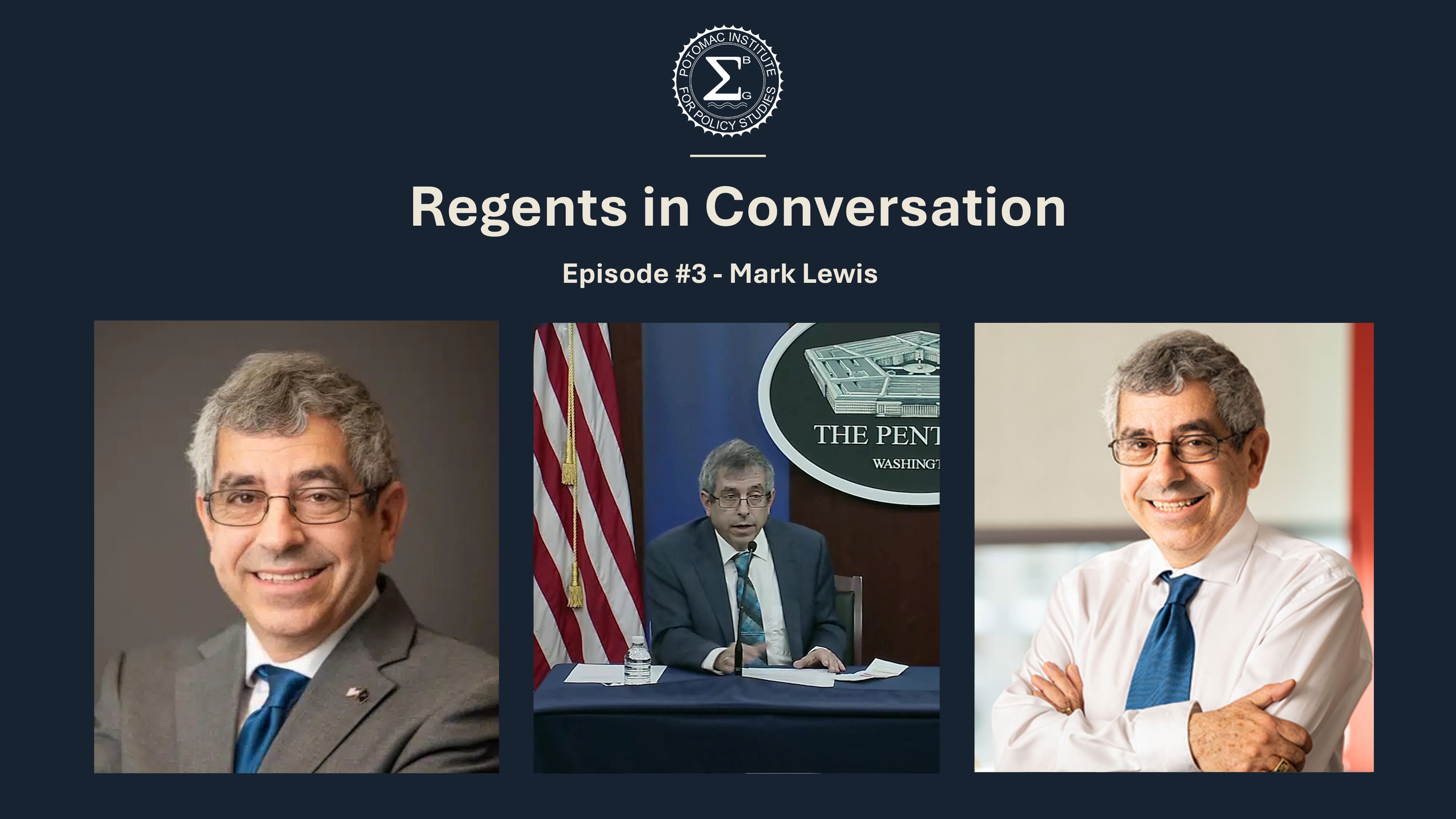
In this episode of Regents in Conversation, Jen Buss speaks with Dr. Mark Lewis about the role of science in shaping national security policy. Drawing on experience across academia, government, and defense research, Lewis reflects on how technical expertise, independent analysis, and long-term thinking help decision-makers navigate complex challenges. The conversation explores the value of basic research, the importance of telling the truth in policy work, and the long path from scientific discovery to national impact. Lewis also offers a firsthand perspective on hypersonics, showing how decades of research, persistence, and strategic urgency can turn a technical field into a major national security priority.
Key Takeaways:
- Congress should tie S&T investment more directly to operational defense outcomes.
- Defense innovation policy must improve the transition from research to fielded capability.
- Public-private-academic partnerships are central to U.S. technology advantage.
- Hill oversight should focus on whether innovation pathways are moving fast enough for strategic competition.
- Long-term technical leadership requires sustained strategy and funding.
- Mark Lewis brings a Regent-level perspective shaped by senior defense research and engineering leadership.